How much does it cost to upgrade an electrical panel in los angeles?
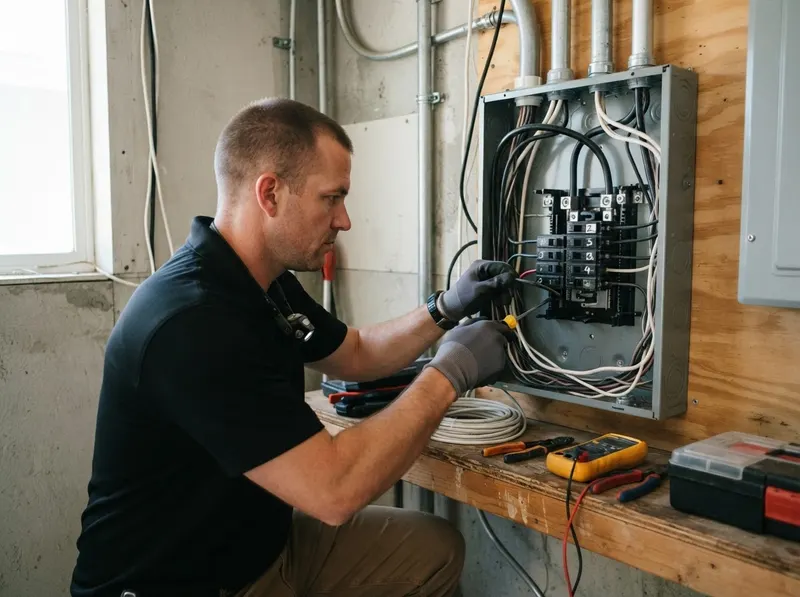
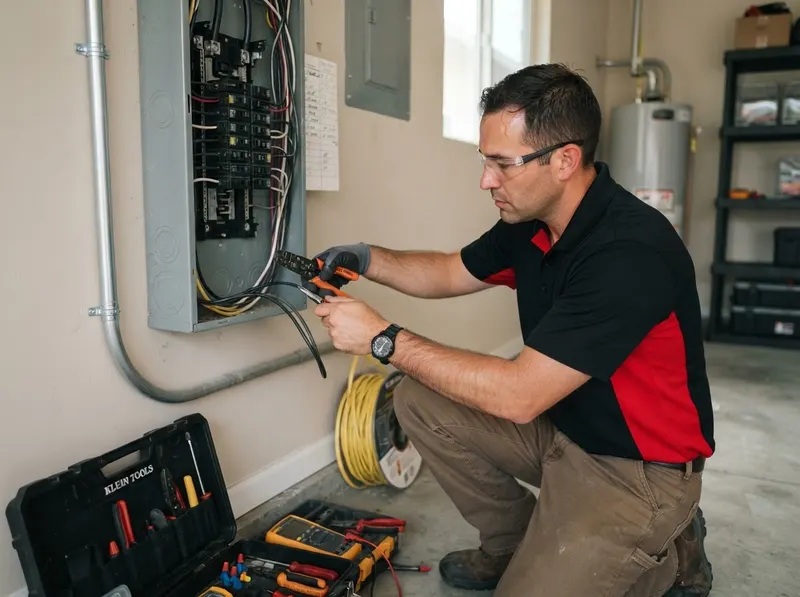
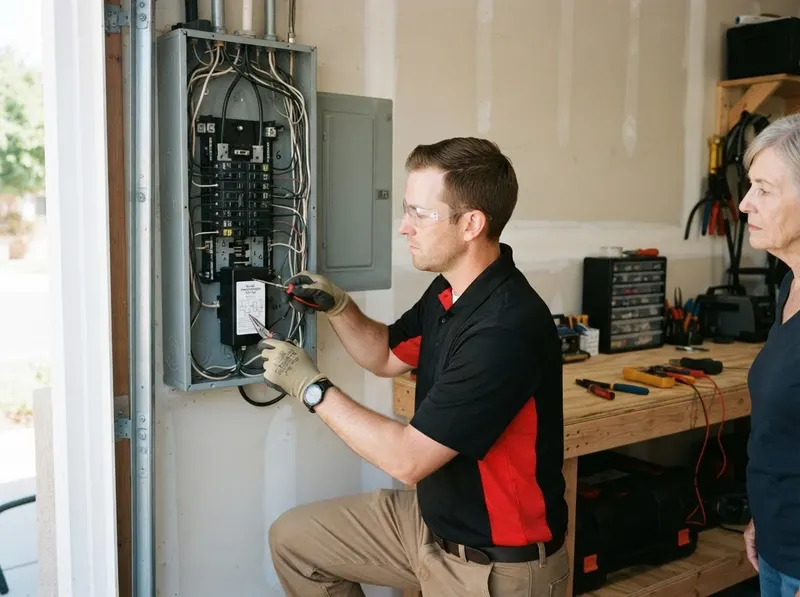
Upgrading an obsolete main service panel to a modern 200-amp outdoor panel in Los Angeles typically costs between $2,800 and $4,500 for a standard overhead service installation. This price includes demolition and proper disposal of the legacy enclosure, mounting a weatherproof NEMA 3R rain-tight panel, installing high-capacity copper bus bars, installing two 8-foot copper grounding rods spaced at least six feet apart, bonding the cold interior water piping system, and adding a whole-home surge protective device. If the utility feed arrives via underground lateral conduit or requires a service relocation to satisfy LADBS working space clearances, total expenses can range from $4,200 to $6,800, with LADWP meter reconnect fees and municipal permit charges accounted for separately based on exact property logistics.
Do I need a city permit for electrical work in los angeles?
Yes, the Los Angeles Department of Building and Safety (LADBS) requires electrical permits for all substantial alterations, additions, and equipment modernizations. This covers main service panel upgrades, subpanel installations, whole-home rewiring, dedicated 240-volt electric vehicle charging circuits, solar interconnections, and commercial lighting alterations. Straightforward maintenance jobs, such as replacing an individual light fixture with an identical model or swapping a single damaged receptacle inside an existing wall box, do not necessitate an electrical permit. WireCraft Electrical manages the entire municipal filing, plan check documentation, and on-site city inspection process directly with LADBS inspectors to ensure all completed work receives an official certificate of compliance.
How can I tell if my home in los angeles has ungrounded cloth or knob-and-tube wiring?
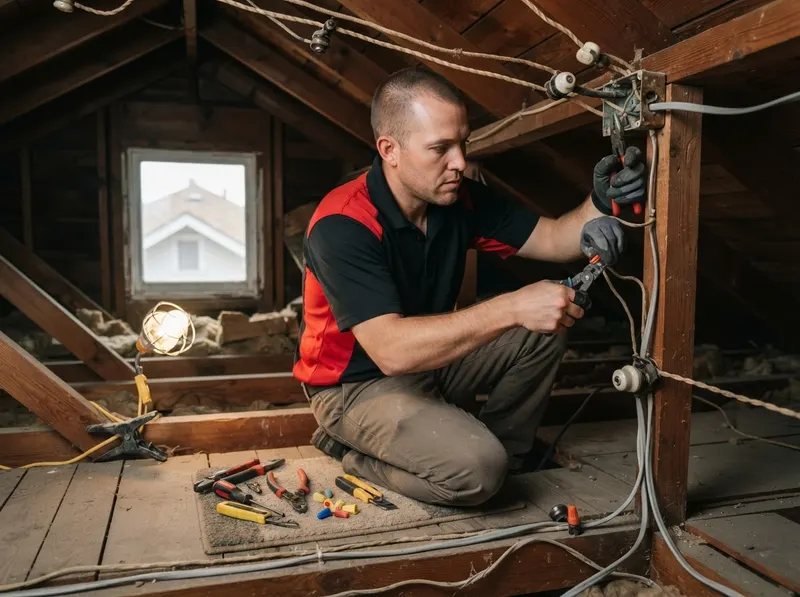
Active knob-and-tube wiring is most commonly found in pre-1950 properties across Los Angeles neighborhoods like Highland Park, Silver Lake, and Los Feliz, and can be visually identified in unfinished basements, crawlspaces, or open attics by porcelain ceramic insulators nailed to wood framing studs with individual cloth-covered hot and neutral conductors running parallel through bored joist holes. Another clear indicator is the presence of original two-prong wall outlets throughout living spaces, which lack a dedicated equipment grounding conductor. Unlike modern Romex cables, knob-and-tube circuits do not include a ground wire and rely on open air for conductor heat dissipation, making them dangerous if modern thermal attic insulation has been blown over them, which traps excess heat and rapidly degrades the dried cloth outer sheath.
Why are Zinsco and Federal Pacific Electric panels considered hazardous in los angeles properties?
Zinsco and Federal Pacific Electric (FPE) Stab-Lok breaker panels, commonly installed in mid-century residences across Los Angeles from 1950 through the late 1970s, possess documented mechanical design defects that prevent internal circuit breakers from tripping during overcurrent and direct short circuits. Independent laboratory testing has shown that FPE Stab-Lok breakers fail to trip in up to 60 percent of overcurrent situations. In Zinsco panels, the circuit breaker clip assemblies are manufactured from an aluminum-copper interface that frequently experiences galvanic corrosion, causing the breakers to weld directly to the hot bus bar. This continuous overcurrent condition generates intense heat, melting internal plastic components, degrading conductor insulation, and significantly increasing the risk of structural electrical fires without ever tripping the breaker.
Can my existing electrical panel support an electric vehicle charger in los angeles?
Determining if an existing panel can support a Level 2 EV charger requires a formal continuous load calculation performed under National Electrical Code (NEC) Article 220 guidelines. A standard 100-amp main panel that already powers a central air conditioner, electric clothes dryer, water heater, and kitchen range usually has zero unallocated continuous capacity remaining for a 40-amp or 50-amp Level 2 charger, which draws heavy continuous load for hours. In such properties, homeowners must either execute a main service panel upgrade to 200 amps or install an intelligent dynamic load-shedding device. The load-shedding device continuously measures total household amperage draw and automatically pauses EV charging whenever other large household appliances are drawing power, safely avoiding panel overloads without an immediate utility upgrade.
What is the difference between an electrical panel heavy-up and a subpanel installation in los angeles?
An electrical panel heavy-up replaces the existing primary service panel and incoming service entrance cables, increasing the total utility power capacity entering the residence from 100 amps to 200 or 400 amps. This process directly involves the utility provider (such as LADWP or SCE) to cut incoming high-voltage power at the pole or transformer, verify line capacity, and set a new digital meter. Conversely, a subpanel installation leaves the existing main panel and utility service entrance untouched, adding an auxiliary distribution box downstream to distribute existing amperage across additional branch circuits. A subpanel provides more physical space for extra circuit breakers but does not increase the total electrical power entering the home from the municipal power grid.
Why are my lights flickering when my air conditioning or heat pump turns on in los angeles?
Flickering lights during the startup cycle of a high-demand motor, such as a central air conditioning compressor or heat pump, typically occur because the appliance compressor draws an inrush starting current that can reach four to six times its normal running amperage. This massive momentary electrical demand causes a transient voltage drop across the household branch circuits, making incandescent and LED lighting dim momentarily. While a minor, split-second dim can be common on marginal 100-amp services, severe or persistent flickering often points to loose, corroded neutral connections at the main service panel, undersized service entrance conductors, or excessive resistance on the utility service drop connection. Installing a hard start kit on the HVAC compressor or replacing aging electrical service infrastructure permanently resolves this voltage drop.
What are the California Title 24 electrical compliance requirements for los angeles homes?
California Title 24, Part 6 energy efficiency standards dictate strict requirements for residential lighting, appliance efficiency, and power consumption across all Los Angeles construction and major remodeling projects. Under these regulations, all permanently installed indoor lighting fixtures must be high-efficacy, meaning they must meet the stringent color rendering index, dimming, and efficiency criteria specified under Joint Appendix 8 (JA8). Title 24 also mandates the installation of approved vacancy sensors or automatic dimmers in rooms such as bathrooms, laundry areas, and garages to eliminate passive power waste. For significant additions or new builds, the code also requires dedicated electrical pathways and designated panel spaces engineered to support future solar photovoltaic systems, battery storage, and Level 2 electric vehicle charging infrastructure.
What causes circuit breakers to buzz or hum inside a service panel in los angeles?
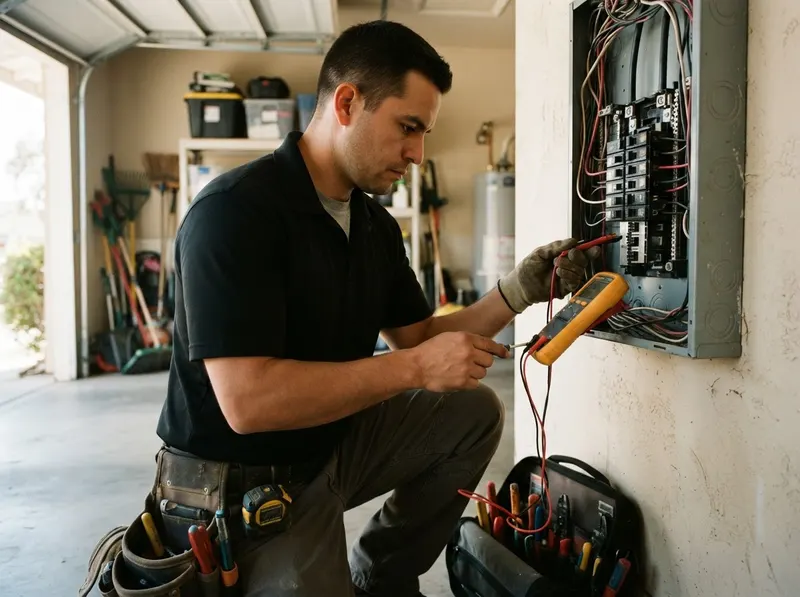
A humming or buzzing sound emerging from an electrical breaker panel typically indicates a serious electrical fault that requires immediate professional evaluation. The noise is usually caused by an internal breaker component vibrating under heavy overcurrent, an internal mechanical failure where the thermal trip mechanism is defective, or arcing between the circuit breaker clip and the panel's copper or aluminum bus bar due to loose terminal seating. Constant arcing generates high localized heat, which can quickly pit the bus bar metal, melt breaker casings, and cause catastrophic panel failure. Any buzzing breaker should be inspected immediately with thermal imaging and continuity testing to determine if replacement or panel bus bar resurfacing is necessary.
How does coastal salt air affect electrical panels in Venice and San Pedro?
Coastal marine environments present in Los Angeles neighborhoods like Venice, Playa del Rey, and San Pedro subject outdoor electrical enclosures to high atmospheric salt concentrations and constant damp marine layers. Airborne salt deposits form a conductive, corrosive crust over exposed metal surfaces, which accelerates galvanic corrosion on exterior disconnect boxes, aluminum meter housings, and grounding bus bars. Over time, this oxidation causes poor metal-to-metal bonding, elevates electrical resistance across terminal connections, increases panel operating temperatures, and can cause breakers to seize inside their tracks. In these coastal zones, installing corrosion-resistant stainless steel or premium marine-grade powder-coated NEMA 3R enclosures, alongside applying dielectric antioxidant compounds to all exterior aluminum-to-copper wire terminations, is critical to maintaining a reliable electrical service lifespan.